
Jewar Airport’s Impact on Noida Expressway Property Prices
Think about the last time a major piece of infrastructure changed how a city felt to live in. Not just faster journeys but a genuine shift in which neighbourhoods felt connected, which locations started attracting serious attention and which residential choices started making more obvious sense.
That is the moment the Noida Expressway corridor is approaching.
The Noida International Airport at Jewar, now operational with commercial flight operations having commenced on June 15, 2026, is not simply an aviation project. For the communities, families and businesses along this corridor, it represents a fundamental change in how the region connects to the rest of India and increasingly, to the world. That kind of shift creates ripples across residential markets in ways that take years to fully understand but the early signals along the Noida Expressway are already worth paying attention to.
Airports Don’t Just Move People-They Reshape Cities
History bears this out consistently. When a major aviation hub opens near an established urban corridor, the effects extend well beyond travel convenience. Companies reconsider where they locate regional offices. Talent flows in from other cities. Hospitality, logistics, healthcare and education infrastructure follow. Employment opportunities expand. And as economic activity strengthens, residential demand in well positioned locations tends to deepen. How Airports historically influence property values
How Airports Historically Influence Property Values
Major airports rarely influence only travel. Over time, they tend to reshape entire economic corridors around them. As businesses, hospitality brands, logistics companies and commercial developments move closer to airport linked regions, residential demand often follows. This pattern has been observed across multiple Indian cities where airport led infrastructure development has contributed to stronger long term residential interest.
For homebuyers and investors, the significance lies not just in faster travel but in the broader ecosystem that develops around major transportation hubs. Improved connectivity attracts economic activity and economic activity tends to strengthen housing demand over time.
What makes Jewar particularly significant is its scale. Now open as one of India’s largest aviation hubs, it is already strengthening NCR’s position as a globally connected economic region in ways that go beyond what existing airports currently support. The supporting infrastructure being built alongside its road networks, expressway upgrades, metro connections and commercial corridors adds further momentum to an already active growth story.
Why Jewar Is More Than Just An Airport
The Noida International Airport has been developed alongside a wider network of supporting infrastructure, including expressways, logistics hubs, commercial districts and regional transit connections. The airport is therefore not an isolated project. It is part of a larger economic transformation that is already strengthening the entire Noida Greater Noida Yamuna Expressway region.
For homebuyers, this creates something that matters more than any single commute time improvement- it creates confidence. Confidence that the region is heading in a clear direction, that infrastructure investment will continue and that a residential decision made today is one that will hold up well over the decade ahead.
What Sector 150 Brings to This Conversation
Not every location along the Noida Expressway benefits equally from these developments. What determines which sectors emerge as genuinely strong long-term choices is whether infrastructure improvements are landing on top of an already solid residential foundation or simply making a weak location slightly more accessible.
Sector 150 falls firmly into the first category.
The sector has spent the better part of the last decade building a reputation centred on something specific: the quality of daily life. Extensive green cover, low density planning, dedicated cycling and jogging infrastructure, wide internal roads and a genuine Sports City designation have created a neighbourhood character that is noticeably different from the denser parts of the corridor. Residents here often describe their mornings differently: less noise, more space, the ability to step outside and actually breathe before a working day begins.
As Jewar’s connectivity advantages strengthen the region’s appeal, they amplify what Sector 150 already offers rather than compensating for weaknesses. Professionals who travel frequently now have better airport access without giving up the greener environment they chose. Families gain regional mobility without sacrificing the neighbourhood quality that shaped their decision in the first place. That combination of genuine lifestyle quality backed by strengthening connectivity is what tends to drive sustained residential interest over time.
How Homebuyer Thinking Has Changed
Residential decisions used to hinge on one question above all others: how far is it from the office? Everything else: the neighbourhood, the surroundings, the quality of daily life was secondary, something to be figured out after the practical box was ticked.
That is no longer the whole picture. Families today are making presidential decisions that need to work across multiple dimensions simultaneously. Children’s schooling increasingly draws parents toward corridors with strong educational infrastructure. Elderly parents living nearby make healthcare access a genuine priority rather than a background consideration. Professionals managing regional business relationships find themselves weighing airport connectivity as seriously as office proximity.
At the same time, buyers have become more deliberate about the environment they are choosing rather than just the address. They are thinking about where their children will grow up, how they will maintain their health across a busy working life, what the neighbourhood will feel like on a slow Sunday and whether the community around them will feel like somewhere worth being part of over the long term.
Sector 150’s planning responds to these questions directly. Its emphasis on outdoor space, wellness infrastructure and community oriented design aligns naturally with how a growing number of buyers are thinking about what makes a home genuinely work for them.
What Twenty Years of Building Communities Teaches You
Prateek Group has been developing residential communities across NCR for over two decades and one of the clearest lessons from that experience is this: infrastructure opens doors but it is the community that determines whether people stay.
Across more than 20 million square feet of delivered development, the pattern holds consistently. Residents who feel genuinely at home in their neighbourhood who know their neighbours, use the spaces around them, feel the community has a social life of its own-speak about their decision to buy differently than those who simply ended up in a well located building. The former group isn’t just satisfied. They’re invested.
More than 50,000 families now live in Prateek communities across the region. That number represents something more meaningful than scale; it represents decades of understanding what residents actually value once they’ve moved in, settled into a routine and begun building a life in a place. With over 10 million square feet currently under development, those lessons are carried forward into every new project.
“Creating Landmarks, Setting Benchmarks” has always meant more than architectural ambition. It means planning communities that continue to serve residents well as their needs change when families grow, when working patterns shift, when a new development matures into an established neighbourhood with its own identity. “Trust. We Know What It Means” reflects something that cannot be built quickly. It accumulates through years of consistent delivery, through maintained promises, through communities that look and feel as good a decade after possession as they did on handover day.
Life at Prateek
What often gets lost in conversations about location, connectivity and capital appreciation is the texture of daily life once the moving boxes are unpacked.
At Prateek communities, that texture is something the group has invested in deliberately through its ongoing Life at Prateek initiative. A Saturday morning that begins with a community cricket match on the grounds below. A summer afternoon where children from three different floors have claimed the same patch of garden without anyone organising it. A rooftop gathering during a festival week where neighbours who have lived side by side for years find themselves in a proper conversation for the first time.
These moments don’t happen by accident. Across Prateek communities, resident engagement programmes create the conditions for fitness mornings that draw the early risers out together, cultural evenings that give families a shared calendar, hobby groups and weekend activities that give residents reasons to show up beyond daily necessity. Shared spaces maintained parks, open green areas, community halls that actually see regular use make it easy for residents to spend time in each other’s company rather than simply near each other.
Over time, these interactions build on each other in ways that gradually change the character of a neighbourhood. A child who joined a community sports programme at eight has friends on the same floor by ten. A family that attended a single neighbourhood dinner finds themselves part of an annual tradition by the third year. Residents who were strangers at possession discover, a few years in, that they have people around them they would genuinely miss if they left.
That depth of connection does not come with the keys. It grows slowly, through repeated small experiences in a place that was designed to make them possible. And it becomes, for most long term residents, one of the things they value most about where they live, often more than the specification, the address or even the view.
The Longer View
Jewar Airport is already strengthening the Noida Expressway corridor and its full impact is only beginning to unfold. The broader picture of the employment hubs, the commercial activity, the residential demand it will anchor will become clearer over the years ahead.
What is already clear is that the locations best positioned to benefit are those that combine strengthening connectivity with an existing quality of life worth connecting to. Sector 150 is one of those locations.
For Prateek Group, the work of building communities that earn that description has been underway for more than two decades. The airport is a significant development but for the families already living in thoughtfully planned communities along this corridor, it is one more reason to feel confident about a decision they had already made.
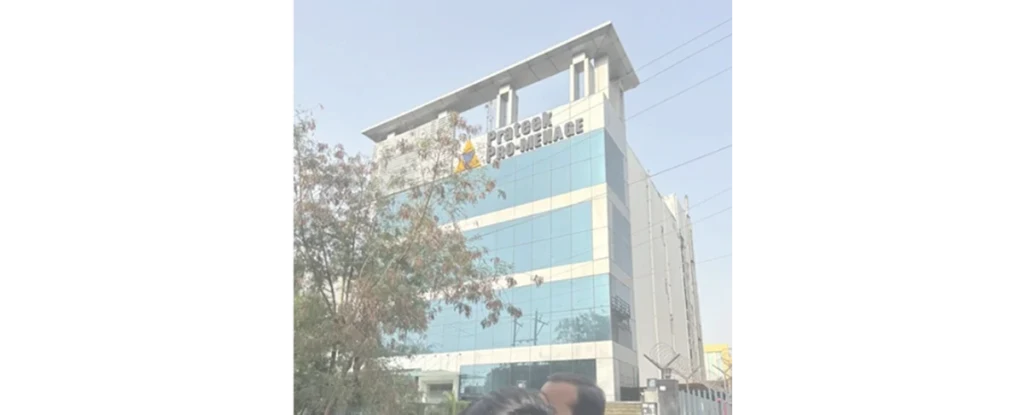
For more details visit Prateek Group Official Website
Connect with Prateek Group
Instagram: Prateek Group Instagram
LinkedIn: Prateek Group LinkedIn
YouTube: Prateek Group YouTube Channel
Facebook: Prateek Group Facebook Page
Corporate Office:
A-42, Sector-67, Noida, Uttar Pradesh, India
Email: info@prateekgroup.com